 Reviews



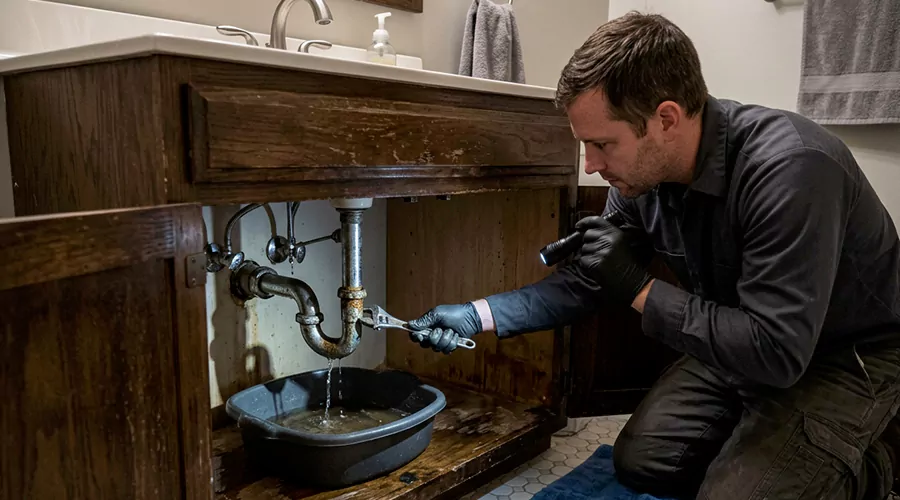
A bathroom sink leaking underneath usually has a loose drain joint, damaged P-trap washer or leaking water-supply connection. Bathroom leak repairs cost $150 to $600 in 2026. A dry-paper test can often identify whether the leak is on the drain side or pressurized supply side. The supplied keyword bathroom sink leaking underneath directly matches this problem. Do not start tightening random fittings. Dry the plumbing first and find the first point that becomes wet.
What Usually Leaks Under a Bathroom Sink?
Bathroom sink leaks commonly start at a P-trap joint or drain seal. Faucet supply hoses and shutoff valves can also leak. Water can travel along piping before dripping, which means the puddle location does not always identify the original source.
- Drain-side water normally appears during sink use.
- Supply-side leaks can continue while the faucet is off.
- A faucet base leak can travel down from above.
- A failed drain flange seal can follow the tailpiece.
This timing difference is the most useful first clue.
How Does an Under-Sink Leak Progress?
An under-sink leak can remain hidden inside a vanity until cabinet materials begin swelling. Slow drips are still damaging because moisture stays in a dark enclosed space. A pressurized leak can worsen faster because water remains available while the sink is unused.
| Leak Stage | What You Notice | Likely Concern | 2026 Cost Exposure |
|---|---|---|---|
| Early | Occasional drop | Loose joint | Often simple DIY |
| Repeating | Vanity remains damp | Washer or seal failure | $150 to $600 |
| Hidden damage | Swollen cabinet | Long-term moisture | Extra repair cost |
| Pipe failure | Water spreads quickly | Damaged plumbing | Can exceed sink repair |
Bathroom leak repairs cost $150 to $600 in 2026. Cleanup involving flooring or drywall can add $300 to $930. The earlier the first wet joint is found, the lower the chance of surrounding damage.
What Warning Signs Reveal an Under-Sink Leak?
A bathroom sink leak can be active long before a puddle reaches the floor. Inspect the vanity when new odor or material changes appear.
- The cabinet floor feels damp.
- Water forms around a P-trap nut.
- A supply hose stays wet.
- The shutoff valve has fresh drops.
- Water appears only when the sink drains.
- The vanity smells musty.
- Cabinet material begins swelling.
- White mineral deposits form around joints.
- Water tracks down the tailpiece.
- The floor below the vanity becomes damp.
Current 2026 leak guidance identifies loose drain seals and corroded P-traps as common under-sink sources. These clues should be checked before any pipe is removed.
How Can You Tell if the Drain Is Leaking?
A drain leak appears when water passes through the waste assembly. The easiest test is to dry the drain and then release a larger amount of water through it.
- Place dry tissue below the P-trap.
- Dry the tailpiece.
- Close the stopper.
- Fill the sink partway.
- Release the stopper.
- Watch the drain flange.
- Then inspect every P-trap connection.
If the tissue becomes wet during drainage but stays dry between uses, the problem is likely on the waste side. The supplied keyword bathroom sink plumbing applies to this visible drainage assembly.
How Can You Tell if a Supply Line Is Leaking?
Supply plumbing remains under pressure while the sink is unused. A leak that appears with no drain activity therefore needs a supply-side inspection.
- Dry both water lines.
- Dry the shutoff valves.
- Place tissue around the fittings.
- Wait several minutes.
- Keep the sink unused.
- Check for fresh moisture.
- Then operate the faucet.
- Inspect again.
If the leak increases when the faucet runs, trace the water upward. A damaged supply hose should be replaced rather than tightened aggressively.
Why Does the P-Trap Leak?
A P-trap can leak when its compression washer is damaged or incorrectly positioned. A loose slip nut can create the same problem. Misalignment places sideways pressure on a connection and can make the leak return after temporary tightening.
- Place a bucket underneath.
- Inspect the leaking joint.
- Hand-tighten a slightly loose nut.
- Test the drain.
- If the leak remains, remove the trap.
- Inspect the washer.
- Replace damaged parts.
P-trap DIY repair materials can cost about $5 to $100 in 2026 depending on what needs replacement. Do not overtighten plastic fittings.
Can the Drain Flange Leak?
Yes. The drain flange sits where the drain body passes through the sink basin. A failed seal can let basin water travel down the outside of the tailpiece. This can look like a P-trap leak because the water eventually reaches a lower joint.
- Dry the sink underside.
- Plug the drain.
- Add water to the basin.
- Do not release it.
- Inspect directly below the drain opening.
Water appearing during this holding test points toward the flange seal. If the area stays dry until the stopper is released, inspect lower drain connections instead. This staged method narrows the repair before disassembly.
Could It Be Condensation Instead of a Leak?
Condensation can sometimes create moisture on cold supply piping in a humid bathroom. The moisture usually forms across a larger surface rather than at one threaded joint. A plumbing leak normally starts from one connection and repeatedly follows the same path.
- Dry the pipe completely.
- Leave the fixture unused.
- Watch how the moisture returns.
- Uniform droplets across a cold pipe suggest condensation.
- A drop forming repeatedly from one fitting suggests leakage.
Do not tighten a connection simply because the outside of a cold pipe is damp. Diagnosis should come first.
What Is the Best DIY Leak Test?
A staged paper-towel test can identify many visible bathroom sink leaks without special equipment. Test the supply system first while the drain remains unused. Then test the drain using a partly filled basin.
- Clear the cabinet.
- Dry every fitting.
- Place tissue around supply connections.
- Wait ten minutes.
- Check for moisture.
- Then fill the basin.
- Release the water.
- Inspect the P-trap.
- Check beneath the drain flange.
Current leak guidance recommends this dry-first method because it reveals the first location that becomes wet.
When Should You Call a Professional?
Professional help makes sense when a shutoff valve is leaking or a pipe is cracked. Hidden moisture inside a wall also deserves professional attention. A leak that remains unexplained after staged testing can require a closer plumbing inspection.
Bathroom leak repairs cost about $150 to $600 in 2026. Professional bathroom sink plumbing work can reach $200 to $800 depending on the repair.
Professional diagnosis is reasonable when:
- The shutoff valve cannot stop water.
- A pipe is cracked.
- The vanity is badly damaged.
- The leak enters the wall.
- New washers do not stop the drip.
- The exact source remains hidden.
Prompt repair becomes more important when water reaches flooring or drywall.
How Can You Prevent Another Bathroom Sink Leak?
Visible bathroom plumbing should be inspected a few times each year. Early moisture can often be found before enough water accumulates to damage the vanity.
- Keep stored items away from the P-trap.
- Look around supply fittings.
- Check for mineral deposits.
- Watch for cabinet swelling.
- Inspect after drain cleaning.
- Respond to musty odor.
- Avoid placing heavy items against under-sink piping.
A small washer is far cheaper than replacing water-damaged cabinet material.
Conclusion
A bathroom sink leaking underneath should be diagnosed by drying the plumbing and testing one water path at a time. A drain-side leak appears during sink drainage. A pressurized supply leak can continue while the fixture is unused. Check the P-trap and drain flange before replacing unrelated parts. If a valve or hidden pipe is leaking, professional repair can limit water damage. Inspect beneath the sink this week for early moisture.
Frequently Asked Questions
Why does my bathroom sink leak only when draining?
A loose P-trap joint or failed drain seal is a common cause because those parts carry water only during drainage.
Why is the cabinet wet when I cannot see a drip?
Water can travel along pipes before falling. Dry the full assembly and test each connection separately.
Can a clogged sink make the P-trap leak?
A blockage can expose a weak drain joint to more standing water. The clog and leaking connection may both need correction.
Can condensation cause water beneath a bathroom sink?
Yes. Cold supply lines can collect condensation in humid conditions.
Should I replace the whole bathroom sink because it leaks?
Usually not. Most under-sink leaks come from plumbing connections or seals rather than the basin itself.